“Seasonal dynamics of ectomycorrhizal rhizomorphs and mycelium structures along a soil salinity gradient”
Department of Natural Resources and the Environment, Cornell University, Honors Thesis (2021–2023)
Poster presented at the 8th International Symposium on Physiological Processes in Roots of Woody Plants
Collaborators: Dominika Thiem, Marcin Gołębiewski, Katarzyna Hrynkiewicz, Marc Goebel
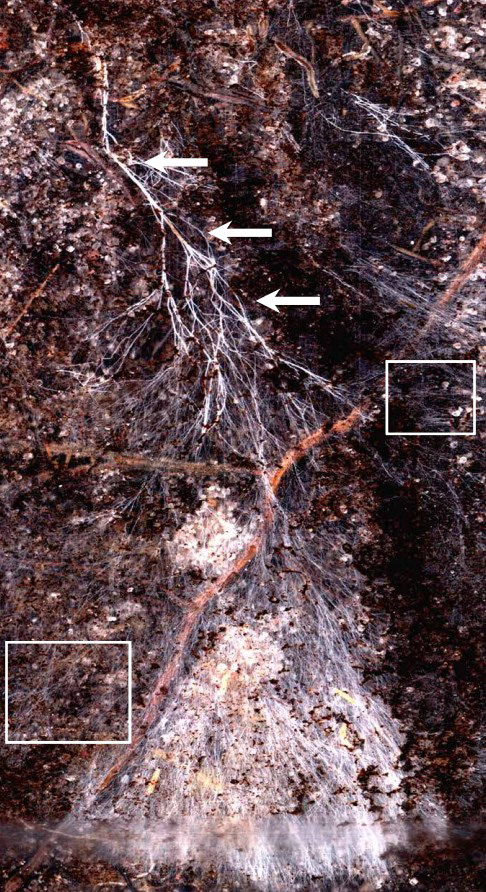
This research explores the metabolic thresholds of subsurface ectomycorrhizal networks along a soil salinity gradient. Using high-resolution Minirhizotron (MR) imagery, I tracked the seasonal dynamics of rhizomorphs and mycelium to understand how environmental stressors disrupt ecological connectivity.
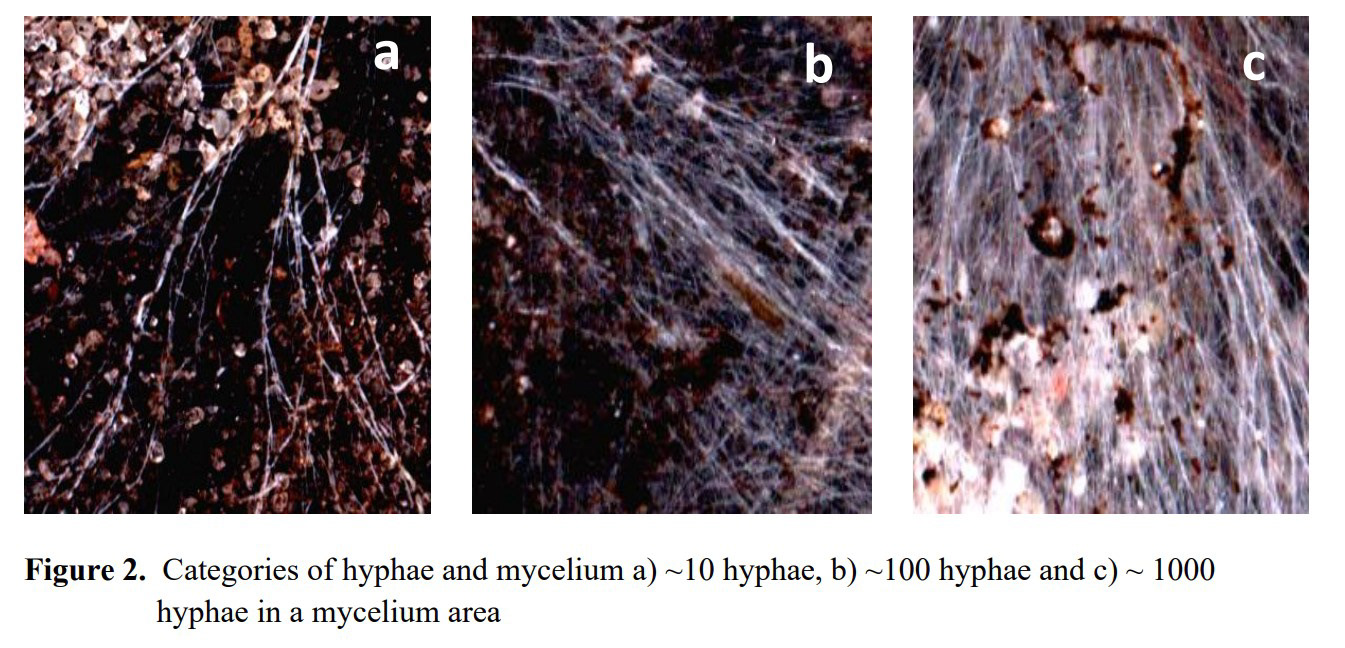
A central innovation of this work was the systematic visual tagging and manual quantification of fungal structures across nearly 540 images. This rigorous process involved the manual identification of individual hyphal structures to categorize mycelial density into distinct tiers—approximately 10, 100, and 1000+ hyphae per area. By translating these visual observations into a precise model of aggregate hyphae length, I was able to quantify the specific impact of soil salinity on fungal abundance over time.
The results demonstrated that increasing soil salinity significantly hinders the structural growth of these networks, which has direct implications for the health and resilience of the visible landscape. This foundational understanding of biological connectivity now informs my professional work in urban planning, where I treat the built environment as a living, responsive system.